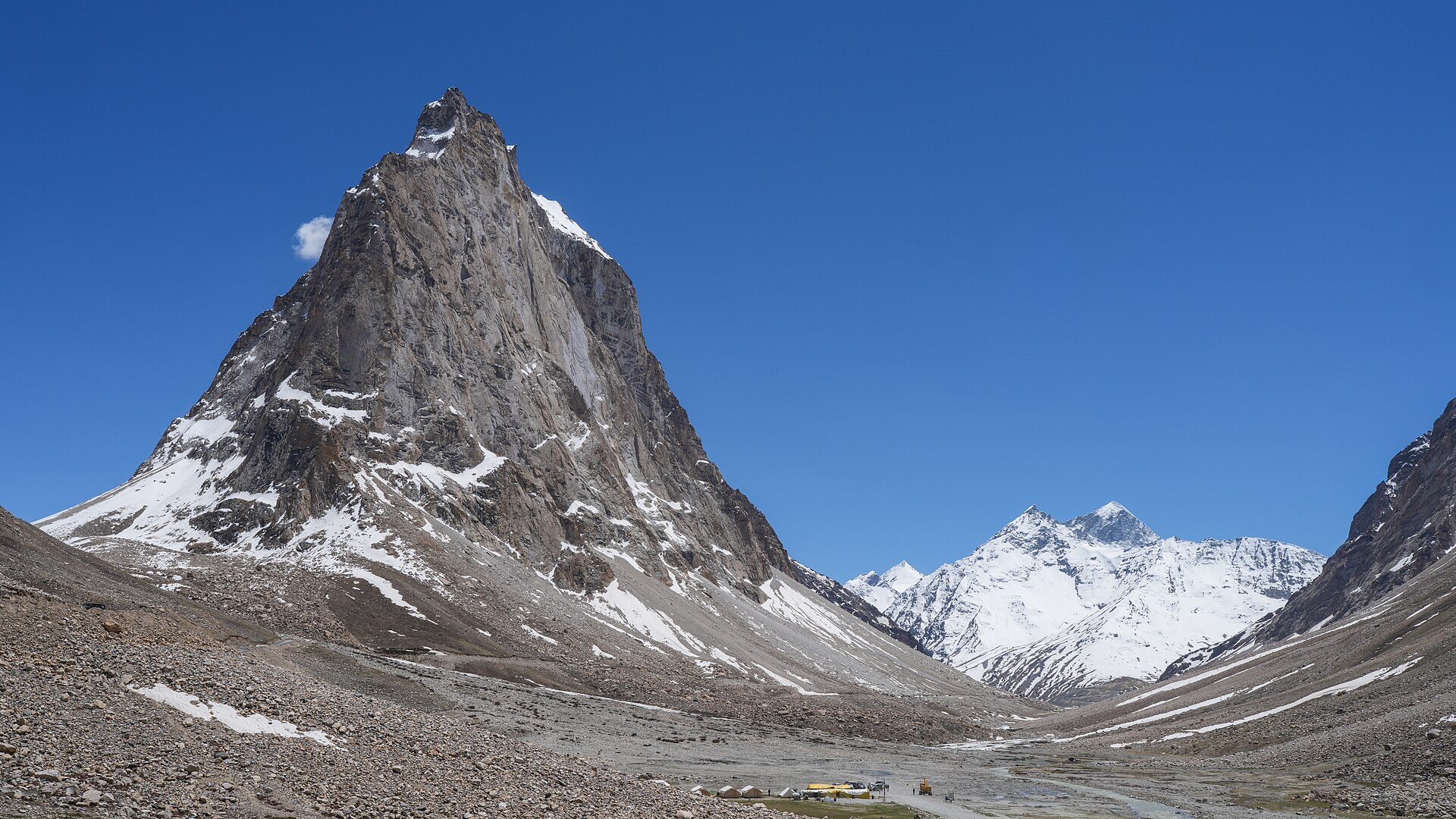
Phugtal, sometimes spelled Phuktal, is one of the few monasteries in Ladakh that still cannot be reached by vehicle, not because the road has failed to arrive but because the cliff it is built into leaves no room for one. The gompa wraps around a natural cave halfway up a rock face above the Lungnak river, in the remote southeastern arm of Zanskar, and reaching it still means walking, even though that walk has shortened considerably over the last decade.
Getting to Purne, the trailhead
Most visitors start from Padum, Zanskar's small administrative town, reached by road from Kargil (around 230 km, roughly 8 to 10 hours by jeep) or, in summer months, from Manali via the Shinkula pass. From Padum, a dirt road follows the Lungnak river southeast to Purne village, a drive of about 60 to 65 km taking 3 to 4 hours depending on the state of the track, which washes out in places most years after the monsoon rains upstream. Purne, at roughly 3600 metres, is the last settlement with regular homestays before the valley narrows and the road gives way to a footpath.
The walk in: about three hours each way
From Purne, the path climbs gently along the true left bank of the Lungnak, crossing a steel suspension bridge about 20 minutes out of the village, then narrows into a gorge trail cut into the rock in several short stretches. The distance is around 8 kilometres one way, and most walkers cover it in two and a half to three hours at an unhurried pace, longer after fresh snow on the higher ground in October. Phugtal itself sits at about 3850 metres, so the net climb is modest, around 250 metres, but it asks more of the lungs at this altitude than the gradient alone would suggest. The trail is well trodden and needs no technical skill, though a few exposed sections above the river are not suited to those uneasy with drops.
Altitude: acclimatise before the trail, not on it
Anyone arriving in Zanskar from lower ground, whether via Kargil, Manali or by flight into Leh, should spend at least two full days at Padum's altitude before attempting Phugtal or any onward trekking. Headaches, poor sleep and breathlessness on the walk in are usually signs of insufficient acclimatisation rather than the trail itself. Padum and Purne sit at roughly the same height, around 3600 metres, so the real risk is skipping the adjustment period by pushing through Leh, Kargil and Zanskar in one continuous journey.
A monastery dated, not guessed
Phugtal's founding is usually placed in the twelfth century, the monastery built around a cave that local tradition holds was already used by hermits and teachers before any structure existed there. The complex now houses several dozen monks of the Gelugpa order, its rooms, library and assembly hall stacked up the cave and the cliff face in a way that, seen from across the gorge, looks closer to a swallow's nest than a planned building. A spring inside the cave is said never to have run dry, and still supplies the monastery's water. None of this needs embellishment; the setting does the work on its own.
The suspension bridge near Purne is the only crossing point on foot. After heavy rain or fast snowmelt the river can rise quickly below it, so cross early in the day if conditions look marginal, and ask at the Purne homestays about that morning's water level before you start.
Season, permits and what it costs
The trail is open roughly from May to late October, with July through September the most reliable window once the Padum to Purne road has been cleared of winter snow and landslip debris, usually by June. Winter access exists but requires serious cold-weather experience and local arrangement; it is not a casual add-on to a Zanskar visit. Foreign nationals should check current permit requirements in Padum before setting out, since rules for inner line and protected areas in Ladakh have changed more than once in recent years and are not always enforced the same way from one season to the next. A homestay in Purne or at Phugtal itself costs roughly 500 to 800 rupees a night including simple meals; a local guide for the day costs around 1500 to 2500 rupees, more useful for river-level advice than for navigation, since the path itself is hard to lose.
The road, and what it has already changed
A motorable road has been advancing down the Lungnak valley for years and, by most recent accounts, now reaches close to Purne, cutting what was once a two or three day walk from Padum down to a half-day drive. This has made Phugtal far more accessible, and busier in peak season, with day visitors now arriving by jeep in numbers that would have seemed unlikely a generation ago. Whether the road eventually crosses the gorge opposite the monastery remains unresolved, and would change the character of the approach altogether. For now, the final stretch is still walked, which is arguably the point of coming at all.